


OVERCOMING
DIGITAL DEMONS
Unleashing Productivity, Taming Computer Addiction

WATCH THE LATEST NEWS BELOW, DIGITUBBIES!
Disclaimer: This is an advocacy website, not a news outlet.
BATTLE COMPUTER ADDICTION WITH US
Overcoming Digital Demons is dedicated to addressing computer addiction by examining its causes and promoting collective accountability. To know more about the campaign go to...

To learn more:
READ OUR ARTICES
Do you want to...
TAKE ACTION
ABOUT US
Here at CDR: Overcoming Digital Demons, we set our sights on spreading information about the implementation of Corporate Digital Responsibility (CDR) alongside existing Corporate Social Responsibility (CSR) frameworks to address issues like computer addiction, especially now that the use of social media is prevalent. As avid social media users who have realized the importance of a safe social media platform,


we strive to improve the morality and social equity among different social media
spaces whose users frequently misuse them for means unnecessary and immoral.
MISSION
At CDR: Overcoming Digital Demons, our mission is to pioneer the integration of Corporate Digital Responsibility (DR) into existing Corporate Social Responsibility (CSR) frameworks. We are dedicated to spreading awareness and knowledge about the impact of digital technology on society, particularly addressing issues such as computer addiction and the misuse of social media platforms. Through advocacy, education, and collaboration, we aim to foster a safer, more responsible digital environment that promotes morality, social equity, and well-being.
Our vision is a world where digital technology is harnessed responsibly to empower individuals and communities, fostering meaningful connections and positive social change. We envision a future where Corporate Digital Responsibility (DR) is universally recognized and integrated into corporate strategies, ensuring that technology serves as a force for good in society. Through our efforts, we aspire to cultivate a culture of digital mindfulness, where individuals engage with technology consciously and ethically, promoting collective well-being and a harmonious digital ecosystem.
VISION
Media: Society’s Leap Forward and Step Back
Corporate Social Responsibility and its Impact on Us
By: Carlos Nicandro
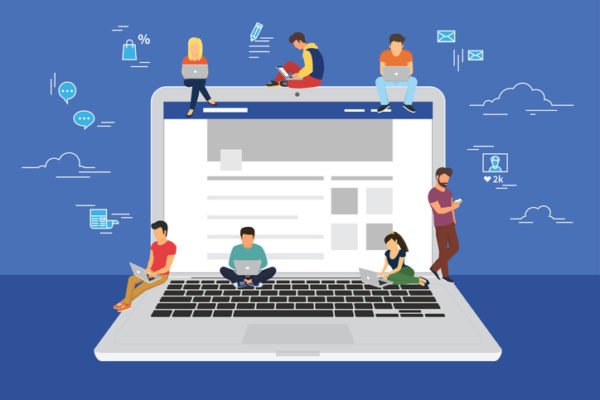
Many of you have used the internet and social media for a large part of your lives, I don’t need to tell you about its dangers… or do I? Maybe you don’t know about the true filth found in social media because you're part of a lucky majority to have not seen it for yourselves? Social media is filled with entertaining, educational, and progressive content yet that doesn’t mean that there are only a few disturbing posts that get added on the waves of content being added in the popular Social Media sites. You may personally not encounter any of what im talking or think it has no effect on you but some of the issues I’m about to talk about may instead affect others or even you in a way you didn’t know about.
“Another side of social media”
Social media is a place that gives you the freedom to make posts that may be seen by thousands of people out there even with malicious intentions.Issues like Misinformation and Disinformation and other online issues runs rampant in social media websites like facebook, and with the power of anonymity it becomes harder to find the route to this issue. For the Philippines, the most recent year where misinformation became a big issue was 2022 where fake news regarding the history of the country was falsely spread particularly in Tiktok and Facebook which warped the perspectives of some its users.
Another example is how that same year, the PNP (Philippine National Police) recorded a rise of online reports like attempted rape, abduction or missing persons only to just be old crimes or ones that were solved around a year ago. Social media may be the future of communication the lack of a proper filter to hold back harmful posts does not only have a negative effect on certain groups of people but how it can hold back the effectiveness of public respondents like the police from working the best they can due to having to process through false reports.
Content, Content
By: Faith Dumapay
The internet is a place for all different things that you can see from many different people. May it be cat videos, latest celebrity drama, or memes that one may find amusing. However, it is not always that wholesome.
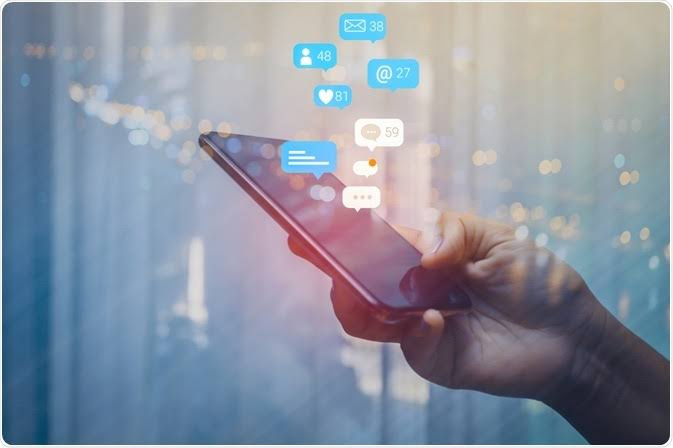
Recently, what was the most disturbing thing you’ve seen on the internet? Did you find vehicular deaths on Instagram reels? Explicit content on X? Or misinformation on Facebook? Just about anything can be posted on social media, and this can have an impact on society as a whole.
But who can fix this? CEOs of social media corporations have the power to mitigate the impact of such harmful content and its negative impact on society, especially on economic and social aspects, and must take responsibility for such.
Think of Mark Zuckerberg, Elon Musk, or Adam Mosseri. What do they all have in common? Aside from being billionaires, they are big time CEOs for major social media platforms. Namely, Facebook, X, and Instagram. Notice how Elon Musk changed the Twitter platform almost entirely, where it was not only rebranded to “X”, but its services also changed.

For instance, charging users a monthly fee to combat bots and capping how many tweets one can read in a day. Why am I saying this? This just shows how CEOs of social media corporations have a big role on their designated social media platform, which in turn, has a big impact on society in this day and age when we have turned towards technology.
With a lot of people adapting and relying on technology in this modern generation, there is a great danger in social media consumption due to the content being displayed.
Many content in social media have caused several members of society to conform to negative characteristics such as aggression, racism, and the like due to the questionable information being allowed to be brought up.
Because of the direct access to social media platforms, there is a chance for information overload, and this information may not always be right.
Some users behind the screen of social media are not completely reliable and due to anyone being able to post on social media, this unreliable information may spread.
Information can have a significant influence on individual behavior, as wrong behaviors displayed in social media can encourage things such as aggression or racism. Imagine seeing a racist meme going viral on the internet, you may think this is normalized as several people on that platform don’t find an issue with it, so you may start to reflect these behaviors as well.
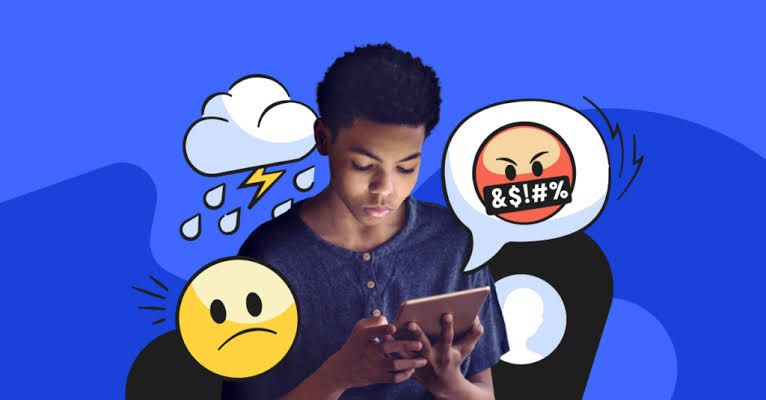
What can we do to prevent this?
Not much.
All we can do is correct information and refrain from posting degrading content in the media.
But what can the CEOs of these social media platforms do?
A lot.
You saw how Elon Musk changed a lot of things on Twitter– or X– and how it affects the user experience. Posts are limited, therefore there may be a reduction in misinformation or harmful content from being posted in a day.
In the same (or different) way, other CEOs can mitigate the harmful impact of content by doing change in their platform, most importantly content filtering. Content filtering is vital as it prevents access to content that can detrimentally impact users. This can lessen users from seeing graphic and inappropriate material and protect them from cyber criminals and malware attacks.

“But people can just be more careful with what they post”, is what you might say.
Well, anything can be posted on social media, and not all people will abide by these rules unless the social media platform restricts them. The impulsivity and anonymity that comes with posting on social media makes the consequences seem less when it comes to being able to post inappropriate content as they have no need to regulate their behavior online.
Additionally, others may feel drawn to posting inappropriate or offensive material as a strategy to fit in with the wider social media culture. This comes to show how the majority of people will not be able to regulate what they post themselves, unless restricted by the social media platform itself.
Though we should do our part in mitigating what we post on social media, others may not feel inclined to do so. Therefore, social media platforms must implement proper content filtering to protect users like you and I from information or content that can harm us. Let us be content with our content.

Social Media Wrapped: You have Spent Way Too Much Time on Social Media this Year
How Corporate Social Responsibility can Impact Health and Habits of its Platform’s Users
By: Jian Paden
How much time have you spent on social media today? 4 hours? 6 hours? Maybe even 8. We spend nearly 6 and a half hours on our phones daily, scrolling through videos and playing games for that boost of dopamine. This is where Corporate Social Responsibility (CSR) comes into play. What is Corporate Social Responsibility you ask?
CSR is when companies make an effort to operate in ways that enhance rather than degrade society and the environment. It is the responsibility of social media CEOs when it comes to making sure that their social media environment is a safe place for users using their platform, depending on what specific media the platform is meant to provide.
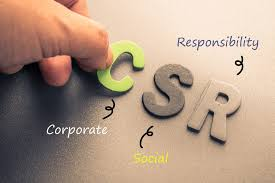
There are several ways in which a company might properly run their platform or improve it. This touches on the ongoing crisis of phone addiction, especially for teens. As CEOs it is important that they play a role in how the user gains something positive from their website and not to let them abuse it for self gratification or malice.
No matter the media platform, there are certain flaws or loopholes that must be addressed and solved to further prevent any more damage. This is also heavier on platforms that allow harmful content. Multiple precautions such as age verification and parental locks should be made for underage users on social media apps so that they aren't subjected to harmful material nor do they spend too much time on them the same way games and movies have ratings for how old a person should be to play or watch.
They could also create warnings for adults when viewing sensitive content, especially those with physical/mental issues or trauma. When these steps and more are maintained and the platform is constantly improved based on what needs improvement and ratings from its users, then the company can be deemed to have good CSR.

But...
Why do all of this?
Why should these companies care? They’re just in it for the money are they not?
This is for the safety, good health and satisfaction of the user. Viewing harmful content can affect a person’s psyche and mental health especially when the content contains violence, pornography, or any other immoral activities.
This is especially true for when people use the platform to conduct illegal activities. Companies letting these things happen should not be kept behind closed doors. Setting reminders for when a user is on the app for more than the recommended time is also a useful solution because it reminds them that they should take care of themselves and to take time off social media.

Having good Corporate Social Responsibility also makes a user more likely to use the platform. When they are treated well, they leave reviews and encourage more people to use it.
But isn’t it up to the users to decide how much time they spend on social media? And isn’t it the user or the user’s parent’s fault that they watch harmful content?
In a sense, yes. They are responsible for their own actions. But social media companies should be making it a goal to make them realize that what they are doing is bad for them and that they care as a company for its users. Setting reminders can help users cut down on screen time regardless, and the company is in control of what media they put out so they could definitely help in that regard.
Despite all of the ins and outs and intricacies of social media, it is important that social media CEOs are able to adapt to each situation with a solution while having a solid foundation of morals and genuine care for its users in mind. While no social media platform is perfect, having the initiative to try to help its users while also providing them satisfaction and knowledge from the content they consume is still a lot of help.
The Call for Responsibility:
Combating Computer Addiction
Who is responsible for Computer Addiction? Me, you, or the corporate team?
By: Beyonce Venice L. Abne
Let us dive into a topic that's increasingly relevant in our hyperconnected world: computer addiction. Have you ever found yourself scrolling endlessly through social media, caught up in online injustices or controversies? It's a common experience in the digital age, but who bears responsibility for addressing this issue?
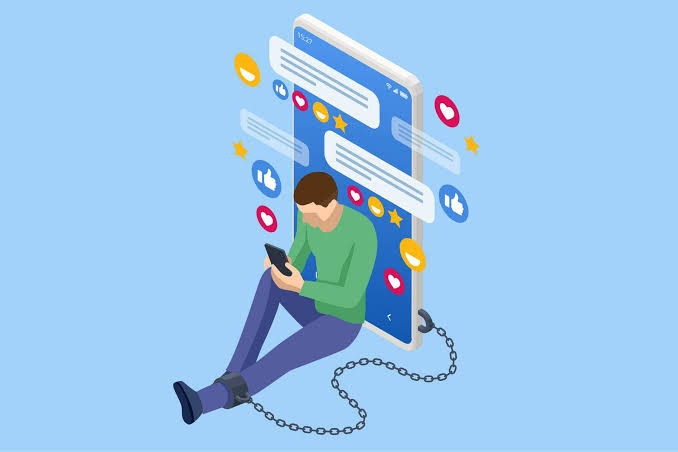
While individuals certainly play a role in their own digital habits, we can't ignore the influence of the platforms themselves. Just as educators and
policymakers contribute to shaping educational environments, corporate teams behind social media platforms have a responsibility to promote healthy digital behaviors. This is where the concept of Corporate Digital Responsibility (CDR) comes into play.
CDR expands upon the traditional Corporate Social Responsibility (CSR) model to address the unique challenges of the digital landscape. As we spend more time online than ever before, it's crucial that these platforms prioritize user safety and well-being. This means implementing effective policies and monitoring systems to combat excessive computer usage and mitigate the negative impacts of digital addiction.
But achieving CDR requires more than just empty promises from corporate leaders. It demands a willingness to adapt and innovate in order to create a safer and more responsible online community for all users. While individuals have the power to make choices about their own digital consumption, it's up to companies to ensure that their platforms are designed with user safety in mind.
At the end of the day, achieving a healthier digital environment requires a collective effort. By advocating for Corporate Digital Responsibility alongside existing CSR frameworks, we can work towards a future where accountability and ethical practices shape our online interactions for the betterment of society as a whole.
What if companies gave more back?
If we help companies grow, what should we really get back?
By: Alfonso Biason and Beyonce Abne

Everyone is well endowed with the traditional system of customer and seller. A customer wants to make a purchase off a seller, they give money to the seller and the seller gives a product or service in return, simply. But what if we pondered the thought of a deeper meaning? What is the real responsibility of either side?
When it comes to a buyer or a customer, it's more than just giving money and purchasing something. It's about helping a business grow further and gain more reputation. It's about supporting the once small goal of someone and helping it flourish into something to be proud of.
How about a seller then?
Social media users' and corporations' relationships are similar to the classic buyer-seller dynamic, but they also take on new forms. Through interactions, shares, and reviews, users interact with companies not only as buyers but also as advocates, helping them to develop and build its reputation through sharing, reacting, and commenting. Likewise, companies have a responsibility beyond transactions to nurture these relationships, ensuring customers feel valued and respected, embodying Corporate Social Responsibility in the digital age.
It is a company's Corporate Digital Responsibility. To make sure a user feels safe valued, to feel as if their actions are something to the company and that the company cares for their well-being.
A seller does way more than just sell a product and earn money. Like what was mentioned above, sellers are given money to generate profit to further themselves into their goals as a company. But it's also their responsibility to care for their customers and make sure they feel valued and acknowledged for supporting the business.
TAKE
ACTION
Progress isn’t always measured in leaps; even the smallest steps leave lasting footprints.
FOLLOW US ON SOCIAL MEDIA!


DOWNLOAD Screen time limit apps
LOOK AT SIMILAR ADVOCACIES
Cease the online habit
Link
Link
REFERENCES
The boring, but helpful section!
Cabalza, D. (2022, August 27). Even
PNP now complains about fake news on Facebook, TikTok / Inquirer News.
INQUIRER.net. https://
newsinfo.inquirer.net/1653990/even-pnp-now-complains-about-fake-
news-on-facebook-tiktok
Pros and Cons of social media / Lifespan. (n.d.). Lifespan. https:// www.lifespan.org/lifespan-living/
social-media-good-bad-and-ugly
The responsibilities of social media platforms and users / Public engagement. (n.d.). https:// publicengagement.umich.edu/the-
responsibilities-of-social-media-platforms-and-users/.
CONTENT, CoNTENT
Hager, C. (2024, February 28). A CEO’s responsibility to join the world of social media. Forbes. https://www.forbes.com/sites/forbescommunicationscouncil/2020/05/27/a-ceos-responsibility-to-join-the-world-of-social-media/?sh=3985ea40427a
HELLO! (2020, February 19). Why do people really post mean comments online? The experts explain. HELLO! https://www.hellomagazine.com/healthandbeauty/health-and-fitness/2019012966949/why-people-post-mean-comments-on-social-media-psychologists-explain/
Lelisho, M. E., Pandey, D., Alemu, B. D., Pandey, B. K., & Tareke, S. A. (2022). The Negative Impact of Social Media during COVID-19 Pandemic. Trends in Psychology, 31(1), 123–142. https://doi.org/10.1007/s43076-022-00192-5
Mcsweeny, A. (2017, August 22). Social media culture can encourage risky and inappropriate posting behaviour, new study suggests. Phys Org. https://phys.org/news/2017-08-social-media-culture-risky-inappropriate.html
What is Content Filtering? Definition and Types of Content Filters. (n.d.). Fortinet. https://www.fortinet.com/resources/cyberglossary/content-filtering#:~:text=Why%20Is%20Content%20Filtering%20Important,to%20graphic%20or%20improper%20material.
Benevity. (2023, November 29). What Are the Top Seven Benefits of Having a Corporate Social Responsibility Program? Benevity. https://benevity.com/resources/corporate-social-responsibility-benefits
Lissak, G. (2018). Adverse physiological and psychological effects of screen time on children and adolescents: Literature review and case study. Environmental Research, 164, 149-157. https://doi.org/10.1016/. j.envres.2018.01.015
Fielding, S. (2023, March 26). TikTok put 60 minute daily time limits on people under 18-Should we all do it?
Verywell Mind. https://
www.verywellmind.com/should-everyone-limit-their-social-media-
use-7368887
Statista. (2024, April 10). Average daily time spent on social media worldwide
2012-2024. https://www.statista.com/ statistics/433871/daily-social-media-usage-worldwide/.
Randy Kulman Ph.D. (2021, May 21).
Are parents to blame for too much screen time? Psychology Today.
https://www.psychologytoday.com/us/.
blog/screen-play/202105/are-parents-blame-too-much-screen-time
THE CALL FOR RESPONSIBILITY: COMBATING COMPUTER ADDICTION
Chair of Sustainable Business Uni Mannheim 2015-22. (2020, July 2). Corporate responsibility in the digital age [Video]. YouTube. https://www.youtube.com/watch?v=NZwA8O3HNyU
Lucrecia. (n.d.). Risks of Social Media. English4tutors. https://www.google.com/imgres?imgurl=https://english4tutors.com/wp-content/uploads/2024/02/formatka-copy-21.jpg&tbnid=0WfT4194vBLh7M&vet=1&imgrefurl=https://english4tutors.com/lessons/risks-of-social-media/&docid=MURAqKldjGNU0M&w=1024&h=613&gl=PH&source=sh/x/im/m1/3&kgs=039b2b16e00ab503&shem=abme,trie
Lohare, C. (2023, July 20). How to Find Clients for Your Business Through Social Media. LinkedIn. https://images.app.goo.gl/GFijejgNPckunw2u6
What iF Companies Gave More Back?
O’Brien, L. (2014, August 1). Do rewards really create loyalty? Harvard Business Review. https://hbr.org/1995/05/do-rewards-really-create-
loyalty
Wadarajan, V. (2024, February 20). Loyalty programs: what works and what doesn’t. Forbes. https://www.forbes.com/sites/forbestechcouncil/2022/11/18/loyalty-programs-what-works-and-what-doesnt/?sh=8b43e6f6539d
Chen, J. (2022, December 31). Loyalty Program: definition, purposes, how it works, example. Investopedia. https://www.investopedia.com/terms/l/loyalty-program.asp
Why customer loyalty programs can backfire. (2021, April 13). Harvard Business Review. https://hbr.org/2021/05/why-customer-loyalty-programs-can-backfire
Loyalty program management: 8 proven practices for managing your loyalty program. (n.d.). https://www.openloyalty.io/insider/loyalty-program-management#:~:text=5.-,Constantly%20work%20on%20the%20value%20proposition%2C%20benefits%2C%20and%20rewards,available%20through%20your%20loyalty%20scheme